Smart Ways Teams Build and Run Big Machines with RobotsOps
Introduction
Robots build our cars, pack our boxes, and clean our floors. But running hundreds of machines brings big real-world problems. Machines break down, batteries run out, and code crashes.Teams need a smart system to manage these helpful helpers. We call this modern discipline RobotOps. It blends software engineering, cloud tools, and hands-on maintenance.Our engineers spent years working with physical automation systems on factory floors. We watched tiny software errors stop entire shipping lines for hours. So, we set up RobotsOps as a friendly learning space. It gives students, builders, and plant managers clear guides for daily machine work.
What is Robotics Operations
Robotics Operations is the daily work of keeping machines running in top shape. You monitor machine health, send out code updates, and repair broken parts.Think of it like running a big pit crew for racing cars. One team checks the engine oil. Another team updates the screen maps.Engineers use cloud dashboards to track each machine in real time. They see battery levels, motor heat, and travel paths right away. Because teams catch small hiccups early, the machines keep working without surprise stops.
Smart Robot Fleet Management
When you run fifty machines at once, you need Robot Fleet Management. This means you track, guide, and update all your machines from one central desk.Managers look at live signals called telemetry to check machine speeds. If one bot runs low on battery, the software sends it to a charger. Next, another bot rolls out to take over the job.Studies show that smart fleet software cuts unexpected machine stops by thirty percent. It turns a messy room of rolling bots into a calm, neat dance team.
Heavy Work with Industrial Robotics
Factories rely on Industrial Robotics to do heavy lifting every single day. Huge metal arms weld car doors, lift heavy steel parts, and paint shiny hoods.These big tools need strong safety rules, solid metal frames, and fast computers. Technicians set up laser sensors around each arm. If a person walks too close, the big arm stops in a blink.Safety leads every choice here. Learners pick up arm controls, factory sensors, and setup rules on RobotsOps to protect workers and speed up daily tasks.
The Power of Robotics Software
Metal parts form the body, but Robotics Software is the true brain. This code helps the machine look around, think fast, and make smart moves.Perception code takes camera pictures and spots boxes or people in the path. Navigation code picks the safest hallway to travel down.Engineers write clean programs so the motors turn smoothly without bumping walls. Good software keeps the bot calm and steady, even inside noisy, crowded rooms.
Building Fast with Robot Simulation
Smart builders never test brand-new code on a heavy metal bot first. Instead, they run a Robot Simulation inside a computer video game world.Engineers make digital twins of their robots and fake warehouse rooms. They test wall collisions, camera lag, and wheel slip safely on screen.As robotics lead Sarah Chen notes, virtual runs save teams months of painful floor repairs. A simulated crash costs zero dollars. So, teams fix every bug in the digital world before turning on real switches.
Moving Fast with Autonomous Mobile Robots
Rolling helpers called Autonomous Mobile Robots move goods inside modern storage hubs. These smart carts roll across long floors without tracks or floor tape.They use laser eyes called LiDAR to map empty hallways and avoid workers. In busy fulfillment centers, these carts move millions of packages without dropping items.Because they move by themselves, workers avoid sore backs and tired feet. The carts haul the heavy crates while people pack the final orders.
Boosting Work with Robotics Automation
Modern companies use Robotics Automation to speed up slow, boring chores. Smart machines stack wooden pallets, sort colored medicine bottles, and check food boxes for leaks.One partner farm used rolling picker bots to harvest ripe berries. The machines picked fruit twice as fast and dropped damage by twenty percent.This automation keeps prices down and gets goods to families faster. It also lets human workers focus on creative fixes and technical supervision instead of hard manual labor.
Inside the Robotics Operations Center
A Robotics Operations Center looks just like a space flight control room. Operators sit in front of large screens and watch every machine live.They track machine speed, error codes, and map updates across three shifts. If a bot gets stuck between two pallets, a remote pilot can steer it out.The center keeps full control over the fleet day and night. It acts as the steady watchtower that stops small machine errors from turning into huge plant shutdowns.
Coding Clean Systems with ROS 2
Programmers around the world build modern machines using ROS 2. This open software set acts like telephone wire between computer parts.The camera talks to the wheels, and the battery talks to the screen. It works smoothly across small chips and giant factory computers alike.Learners study practical ROS 2 nodes, packages, and code patterns on RobotsOps to build stable projects. Its rock-solid messaging tools make it the top choice for smart commercial machines.
Comparing Robot Setups and Tools
Choosing the right machine setup depends on your building, budget, and daily work goals.
| Robot System Type | Primary Mission | Main Software & Sensors | Big Benefit |
|---|---|---|---|
| Industrial Arms | Welding, heavy lifting, and fast factory assembly | Factory controllers, safety laser barriers, motor encoders | High speed, exact precision, and human safety |
| Mobile Helpers | Hauling boxes, warehouse trips, and floor scanning | LiDAR light sensors, live map code, ROS 2 nodes | Bypasses obstacles and stops lifting strain |
| Virtual Testing | Finding software bugs inside safe computer rooms | 3D world models, virtual cameras, physics engines | Zero repair bills and super fast development |
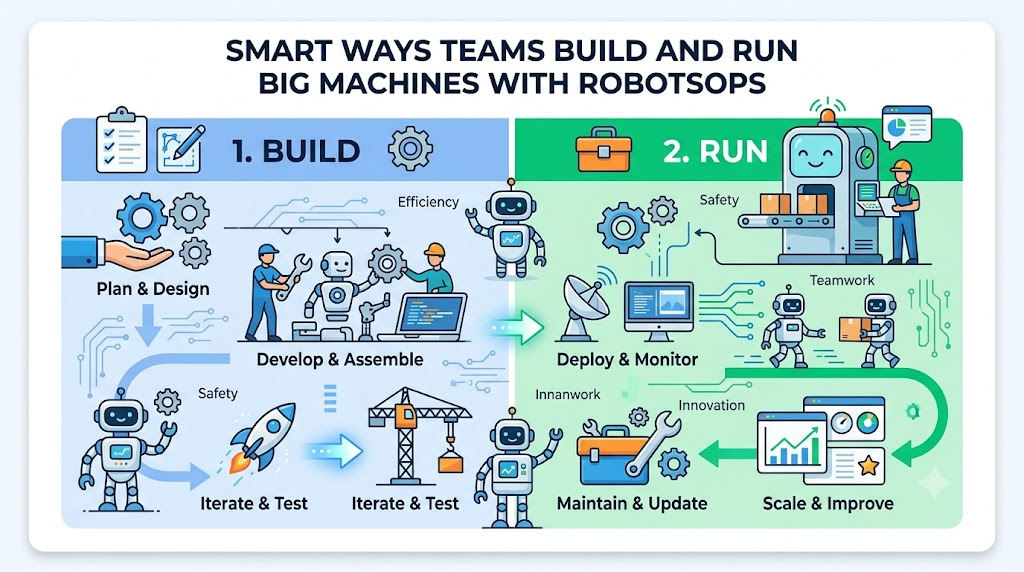
How Teams Roll Out Clean Machine Systems
Teams follow four clear steps to launch machines without messy bugs:
- Step 1: Test inside virtual worlds. Run your code through digital tests first to spot crashes early.
- Step 2: Check safety stops. Place physical stop buttons and laser eye sensors around your work zone.
- Step 3: Connect fleet telemetry. Hook machine data lines into a central dashboard for quick health scans.
- Step 4: Push code in batches. Update three bots first to prove stability before updating all fifty bots.
Real Job Roles in Modern Fleet Work
Different specialists handle unique pieces of daily machine care:
- Fleet Operator: Sits at the central desk, tracks alarms, and steers stuck machines safely out of tight corners.
- Automation Technician: Walks the concrete floor, swaps low batteries, tightens bolts, and cleans camera lenses.
- Operations Engineer: Writes deployment scripts, studies heat data, updates control code, and improves map routes.
Frequently Asked Questions About robotsops
What is the core meaning of RobotOps?It is the practice of building, updating, and fixing robot code using modern web and software tricks.Why do teams run code tests inside virtual simulations first?Simulations let builders crash fake bots on screens safely so they do not break expensive metal parts in real life.How do mobile carts see walls and walking humans?They use fast laser scanners and tiny cameras to draw live floor maps and steer around moving obstacles.What special work happens inside an operations watch center?Operators sit at wide monitors, watch live machine health, and steer bots remotely if wheels get stuck.Why is ROS 2 so popular for building machines?It provides free, reliable software plumbing that helps robot cameras, motors, and computers share data easily.Can regular factory machines update their code over the air?Yes, modern operations teams push bug fixes straight to connected machines without plugging in physical cables.How does fleet software prevent traffic jams in warehouse aisles?The central computer plans unique travel paths for every rolling bot so machines never block each other.What keeps big metal factory arms safe around humans?Laser light curtains and pressure mats cut machine power instantly the moment a person steps too close.Where can beginners find simple tutorials on fleet care?Learners find guides on RobotsOps to explore setup steps, fleet tools, and modern software tips easily.How does predictive upkeep save money for factory owners?Sensors warn technicians about hot motors or worn gears early, so crews fix parts before a full breakdown stops work.
Final Thoughts on Modern Machine Care
Robotics is changing how goods get made, moved, and delivered every single day. Teams that master daily fleet care build safer rooms and ship orders much faster. By testing in virtual worlds, checking live signals, and using clean code, engineers keep machines working at their best.