Becoming a Certified DevOps Manager: A Complete Guide
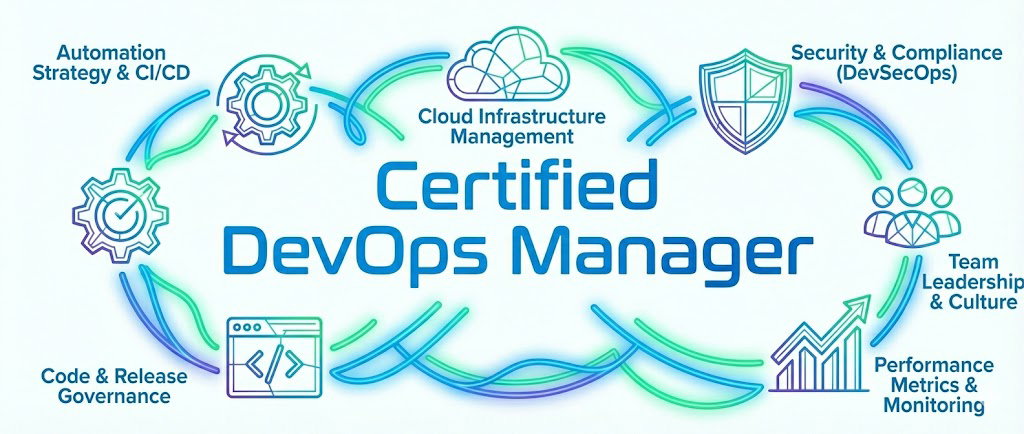
The modern engineering landscape requires more than just technical proficiency; it demands a bridge between high-level business strategy and ground-level execution. This guide explores the Certified DevOps Manager designation, a credential designed for those looking to lead digital transformation. Whether you are an aspiring lead or an established director, understanding the nuances of this role is vital for navigating the complexities of platform engineering and cloud-native ecosystems. By focusing on both cultural shifts and technical governance, this roadmap helps professionals at DevOpsSchool and beyond make informed decisions about their leadership trajectory.
Introduction
As organizations scale their cloud infrastructure, the need for structured leadership becomes paramount. A Certified DevOps Manager acts as the glue between development, operations, and security teams, ensuring that the software delivery lifecycle remains fluid and automated. This guide provides a deep dive into the certification process, helping you understand how to transition from an individual contributor to a strategic leader. We examine the competencies required to manage complex CI/CD pipelines, site reliability standards, and diverse engineering talent in a global market.
What is the Certified DevOps Manager?
The Certified DevOps Manager program represents a shift from purely functional tool knowledge to holistic system thinking and organizational management. It exists to validate that a leader can not only use tools like Kubernetes or Terraform but can also design the policies that govern their use across an enterprise. This certification emphasizes production-grade reliability and the implementation of DevOps at scale. It aligns perfectly with modern enterprise practices by focusing on metrics, value stream mapping, and the removal of departmental silos.
Who Should Pursue Certified DevOps Manager?
This path is ideal for senior software engineers, SREs, and cloud architects who find themselves increasingly involved in team leadership and architectural decision-making. Transitioning managers who come from traditional IT backgrounds will find this particularly useful for updating their mental models to match agile and cloud-native realities. In the context of the global tech hub in India and across international markets, this credential serves as a benchmark for technical management capability. Beginners with a strong foundation in SDLC also benefit by visualizing their long-term career progression into leadership.
Why Certified DevOps Manager is Valuable in 2026 and Beyond
The demand for technical leaders who can navigate the "human element" of technology remains at an all-time high despite the rapid evolution of AI and automation tools. This certification ensures longevity because it focuses on principles—governance, cost optimization, and security—that persist even as specific software brands change. Enterprises are moving away from chaotic growth toward sustainable, profitable engineering, making the role of a manager who understands FinOps and DevSecOps indispensable. Investing time here yields a high return by positioning you for executive roles like Head of Infrastructure or Director of Engineering.
Certified DevOps Manager Certification Overview
The program is delivered through the official curriculum found at devopsschool.com/certification/certified-devops-manager.html and is hosted on the DevOpsSchool platform. The certification is structured to move candidates through various assessment phases, including theoretical exams and practical leadership scenarios. It utilizes a multi-level approach to ensure that ownership of the DevOps culture is understood at both the team and organizational levels. The structure is practical, favoring candidates who can demonstrate an ability to solve real-world bottlenecks in delivery.
Certified DevOps Manager Certification Tracks & Levels
The certification is categorized into foundation, professional, and advanced levels to cater to different stages of a career. The foundation level introduces the core philosophy of management, while the professional level dives deep into specialized tracks like SRE management or DevSecOps governance. For those at the top of their field, the advanced level focuses on enterprise-wide transformation and MLOps or FinOps integration. These levels align with typical career progression from Team Lead to Engineering Manager and eventually to VP of Operations.
Complete Certified DevOps Manager Certification Table
| Track | Level | Who it’s for | Prerequisites | Skills Covered | Recommended Order |
| Core Leadership | Foundation | Aspiring Leads | 3+ years in IT | DevOps Culture, Metrics | 1 |
| Operations Management | Professional | SRE / Ops Leads | Foundation Level | SRE, Incident Response | 2 |
| Security Governance | Professional | Security Leads | Foundation Level | Compliance, DevSecOps | 3 |
| Enterprise Strategy | Advanced | Directors / VPs | 10+ years exp | FinOps, AIOps, Scaling | 4 |
Detailed Guide for Each Certified DevOps Manager Certification
Certified DevOps Manager – Foundation Level
What it is
This level validates the candidate's understanding of the core pillars of DevOps from a management perspective. It ensures the leader can foster a culture of shared responsibility and continuous improvement.
Who should take it
Senior engineers and new team leads should pursue this to build a formal framework for their leadership style. It is designed for those transitioning out of pure coding into coordination roles.
Skills you’ll gain
- Understanding of the CALMS framework (Culture, Automation, Lean, Measurement, Sharing).
- Proficiency in Value Stream Mapping to identify process bottlenecks.
- Ability to define and track Key Performance Indicators for delivery teams.
Real-world projects you should be able to do
- Conduct a DevOps maturity assessment for a medium-sized engineering team.
- Design a communication plan to break down silos between Dev and Ops.
Preparation plan
- 7-14 Days: Focus on core DevOps definitions and the history of Lean manufacturing.
- 30 Days: Study various case studies of successful DevOps transformations in large enterprises.
- 60 Days: Implement a small-scale process change in your current project and document the results.
Common mistakes
- Focusing too much on specific tool syntax instead of the underlying process.
- Underestimating the difficulty of managing the cultural resistance to change.
Best next certification after this
- Same-track option: Professional Level Operations Management.
- Cross-track option: DevSecOps Specialist.
- Leadership option: Certified Engineering Manager.
Certified DevOps Manager – Professional Level
What it is
This certification confirms the ability to manage complex technical operations, focusing on high availability and scalable infrastructure. It bridges the gap between technical architecture and team delivery.
Who should take it
Experienced managers and SRE leads who are responsible for the uptime and performance of production environments.
Skills you’ll gain
- Mastery of Service Level Objectives and Error Budgets.
- Expertise in managing hybrid and multi-cloud infrastructure teams.
- Capability to lead incident post-mortems and root cause analysis.
Real-world projects you should be able to do
- Implement a centralized logging and monitoring strategy across multiple microservices.
- Establish a standardized incident response protocol for a global 24/7 team.
Preparation plan
- 7-14 Days: Review SRE principles and advanced monitoring tools.
- 30 Days: Practice designing high-availability architectures on paper.
- 60 Days: Deep dive into container orchestration management and cost control strategies.
Common mistakes
- Ignoring the financial aspect of cloud infrastructure (FinOps).
- Failing to balance feature velocity with system stability.
Best next certification after this
- Same-track option: Advanced Enterprise Strategy.
- Cross-track option: AIOps Professional.
- Leadership option: Chief Technology Officer (CTO) Program.
Choose Your Learning Path
DevOps Path
The standard DevOps path focuses on the end-to-end automation of the delivery pipeline. Managers on this track learn how to optimize CI/CD for speed without sacrificing quality. This is the most common starting point for most engineering leaders. It involves mastering toolchains and ensuring that developers have a frictionless experience.
DevSecOps Path
The security-focused path integrates compliance and protection into every stage of the lifecycle. Managers here focus on "shifting left" and ensuring that security is not an afterthought. You will learn to manage vulnerability scanning and automated compliance checks. This path is essential for those working in highly regulated industries like finance or healthcare.
SRE Path
The Site Reliability Engineering path emphasizes system stability and scalability. Managers learn how to use software engineering practices to solve operational problems. This involves a heavy focus on automation, monitoring, and reducing manual toil. It is the ideal path for leaders of infrastructure and platform teams.
AIOps / MLOps Path
This modern path deals with the management of machine learning models and AI-driven operations. Managers learn how to handle data drift, model versioning, and the unique challenges of AI infrastructure. As companies adopt more AI features, this path becomes increasingly relevant for future-proofing your career. It combines traditional DevOps with data science workflows.
DataOps Path
DataOps focuses on the orchestration of data people, processes, and technology. Managers on this track ensure that data pipelines are as reliable and automated as software pipelines. This involves managing data quality and the speed of data delivery to business units. It is a critical role for organizations that rely heavily on big data and analytics.
FinOps Path
The FinOps path is dedicated to cloud financial management. Managers learn how to bring accountability to cloud spend and optimize infrastructure costs. This involves collaborating with finance, engineering, and business teams to balance performance and price. As cloud bills grow, the ability to manage these costs becomes a top priority for executives.
Role → Recommended Certified DevOps Manager Certifications
| Role | Recommended Certifications |
| DevOps Engineer | Foundation + Professional Level |
| SRE | SRE Track + Operations Management |
| Platform Engineer | Core Leadership + SRE Track |
| Cloud Engineer | Foundation + FinOps Path |
| Security Engineer | DevSecOps Path + Security Governance |
| Data Engineer | DataOps Path + Foundation |
| FinOps Practitioner | FinOps Path + Enterprise Strategy |
| Engineering Manager | All Levels + Leadership Track |
Next Certifications to Take After Certified DevOps Manager
Same Track Progression
Once you have mastered the managerial aspects, deepening your technical specialization in specific cloud providers or advanced orchestration is a logical step. You might pursue expert-level certifications in Kubernetes or specific AWS/Azure/GCP architectural suites. This ensures that while you lead, your technical edge remains sharp. Continuous learning in this area prevents a manager from becoming disconnected from the reality of the engineering floor.
Cross-Track Expansion
Broadening your skills into adjacent areas like security or data management makes you a more versatile leader. A DevOps manager who understands the intricacies of data privacy or machine learning pipelines can lead a wider variety of teams. This cross-pollination of skills is highly valued in "full-stack" organizations. It allows you to provide better guidance during high-level architectural reviews.
Leadership & Management Track
For those looking to move into the C-suite or senior executive roles, shifting focus toward business strategy is key. Certifications in ITIL, PMP, or executive leadership programs complement the technical foundation of a DevOps Manager. These programs focus on budget management, organizational psychology, and long-term business alignment. This transition marks the move from managing "how" things are built to "why" and "what" the business builds.
Training & Certification Support Providers for Certified DevOps Manager
DevOpsSchool offers a comprehensive curriculum that balances theoretical knowledge with hands-on lab exercises. They provide expert-led sessions that cover the entire gamut of DevOps leadership and technical tools. Their platform is a go-to for many professionals in India and abroad looking for structured career paths.Cotocus provides specialized consulting and training services that focus on real-world implementation. They help engineering teams adopt DevOps practices by providing practical workshops and certification support. Their approach is highly collaborative and tailored to enterprise needs.Scmgalaxy is a vast resource hub for configuration management and DevOps professionals. They offer a wealth of tutorials, blogs, and community support for those preparing for management certifications. It is an excellent place for self-paced learners to find deep technical insights.BestDevOps focuses on providing streamlined training for the most in-demand DevOps tools and methodologies. Their courses are designed to get professionals up to speed quickly with a focus on job-ready skills. They emphasize the practical application of DevOps in modern software environments.devsecopsschool.com is the primary destination for integrating security into the DevOps workflow. They provide deep-dive certifications into automated security testing and compliance as code. This is an essential support provider for managers in the DevSecOps track.sreschool.com offers dedicated training for site reliability engineering principles. Their courses cover everything from error budgets to advanced observability techniques. It is a specialized platform for those looking to excel in the SRE management path.aiopsschool.com addresses the growing intersection of artificial intelligence and IT operations. They provide training on how to use AI to automate incident management and system monitoring. This provider is at the forefront of the next wave of operational technology.dataopsschool.com focuses on the management of data delivery pipelines. They help managers understand how to apply DevOps principles to data engineering and analytics. Their training is vital for data-driven organizations looking for operational efficiency.finopsschool.com provides the necessary training to master cloud financial management. They offer insights into cost allocation, optimization, and the cultural shift required for FinOps. This is a key resource for managers looking to take control of their cloud budget.
Frequently Asked Questions
- Is the Certified DevOps Manager exam difficult for non-coders?While you do not need to be an expert coder, you must understand the logic of automation and the software development lifecycle to pass.
- How long does it take to prepare for the certification?Most professionals with a technical background find that 30 to 60 days of consistent study is sufficient to master the material.
- Are there any prerequisites for the foundation level?Generally, three or more years of experience in an IT environment is recommended to grasp the organizational context.
- What is the return on investment for this certification?Certified managers often see a significant increase in salary and are eligible for higher-level leadership roles in top-tier tech companies.
- Can I take the exam online?Yes, the certification process is designed to be accessible globally through online proctored examination platforms.
- Does this certification cover specific tools like Jenkins or Docker?It covers the management of these tools within a pipeline rather than teaching you how to write specific scripts for them.
- How often do I need to recertify?The field changes rapidly, so recertification or continuing education units are typically required every two to three years.
- Is this certification recognized in India?Yes, it is highly regarded by major Indian tech firms and global captives operating in the region.
- How does this differ from a standard Project Management Professional (PMP) cert?This is specifically tailored to the technical and cultural nuances of software engineering and cloud operations.
- Will this help me move into a CTO role?It provides the foundational technical leadership skills, though further business management training is usually recommended for C-suite roles.
- Are there lab-based assessments in the exam?Higher levels of the certification often include scenario-based questions that simulate real-world management dilemmas.
- Can I skip levels if I have a lot of experience?It is usually recommended to follow the sequence to ensure no gaps in the core philosophy, but some exceptions apply based on prior experience.
FAQs on Certified DevOps Manager
- What makes a DevOps Manager different from a traditional IT Manager?A DevOps Manager focuses on breaking silos and automating the value stream rather than just managing tickets and infrastructure.
- Does this certification help with remote team management?Yes, the curriculum includes modern communication and collaboration strategies essential for leading distributed engineering teams.
- How much focus is there on financial budgeting?The professional and advanced levels include significant modules on FinOps and cloud cost optimization to ensure business alignment.
- Can I pursue this if I am currently a Scrum Master?Absolutely, Scrum Masters are well-positioned to transition into DevOps management by adding technical governance to their process skills.
- Is Kubernetes management part of the curriculum?The certification covers the governance and scaling strategies for container orchestration rather than deep-dive CLI commands.
- How does the certification address security?Security is treated as a core component of the lifecycle, emphasizing the "shift left" mentality in management decisions.
- Are there community groups for certified individuals?Yes, passing the certification grants access to exclusive forums and networking events hosted by the provider.
- Does the course cover AIOps?The advanced levels and specialized tracks include the use of AI to enhance operational efficiency and predictive maintenance.
Final Thoughts: Is Certified DevOps Manager Worth It?
If you are looking to move beyond the keyboard and start influencing how organizations build software, this certification is a solid investment. It provides a structured way to think about the complex interplay between people, processes, and technology. In a market saturated with "tool experts," a manager who understands the big picture and can lead a team through a crisis is a rare and valuable asset. My advice is to approach this not just as a badge for your profile, but as a framework for your professional growth. The clarity you gain in managing modern engineering workflows will pay dividends throughout your career.
